|
The Center for Eye Care is the continuation of eye care practices in Lewistown since the 1930's. The present practice began in 1980 in a small office and has grown to include:
-
A specialized surgical center
-
A refractive surgery practice
-
Specialized refractive cataract surgery
-
Two clinical offices for patient evaluation
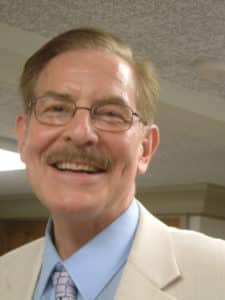
We employ a staff of 15 including ophthalmic technicians, registered and licensed practical nurses, and ancillary staff. The practice is run by Dr. Alan D. Gordon, M.D., an ophthalmic surgeon working in the Lewistown area for the last twenty eight years.
We offer services that are neither available at our local hospital nor at many other local facilities including refractive surgery, glaucoma surgery, modern cataract surgery, plastic surgery of the eyelids, adult eye muscle surgery, corneal graft and several others.
We believe in medicine as a calling. Our mission is to provide the best care available in comfortable surroundings and at reasonable prices. Quality and cost control are important to us and our state licensed surgical facility was built to address the outrageous prices, lack specialized equipment and long waits at the local hospital. We have the most recent modification of excimer laser for LASIK available. Our practice is unique also in that our center has undergone voluntary accreditation by the AAAHC, and Dr. Gordon has undergone American Board of Eye Surgery.
- Dr. Gordon
What makes our practice stand out:
We Cater to Our Patients
As a small town practice, we know most of our patients. Our physician is available for emergencies after hours, and in the rare cases where coverage is necessary, we use the next nearest qualified ophthalmologist (usually in State College) We will answer your questions through e-mail generated from this website. It is the policy of this practice to try to accommodate the patient's financial limitations. We accept almost all open plan insurances including Medicare and Medical Assistance. We try to accommodate our patient's financial needs. We do, however, have a policy of requiring 24 hour cancellation notice if you can't make your appointment.
We accept most major credit cards and our billing department is trained to help with your financial need, and where available, seek help through the state or other agencies.
Dr. Gordon was recently (2008) recognized (voted in by his peers) in an article in the Highmark Blue Shield magazine "Clinical Veiws" as a specialist who communicated well with the patient's internist, family physician and other physicians coordinating care.
The Surgical Center
The Mifflin County Community Surgical Center is managed with the Center for Eye Care in order to coordinate the care a both facilities. In 1995, we petitioned the state of Pennsylvania to build a surgical center to address the high costs and quality issues of local hospital care. We went through the Department of Health hearings for Certificate of Need to prove the need for such a facility in the area and succeeded in getting the center open in 1998.
Many hospitals view ophthalmology as a secondary specialty, and since there are fewer ophthalmologists on staff than say, cardiologists, the equipment and staffing in hospitals can be lacking. The result is our center – a specialized center for ophthalmology with ophthalmic and anesthesia physicians on staff.
Although it is a brief procedure, LASIK is still a surgical procedure. Unlike at many practices, who do LASIK at office centers not certified by the state, we perform LASIK at our state licensed facility, and we use an operating facility specialized for LASIK.
With the introduction of the surgical center, we are able to accommodate most patients within a week or two. The wait at the local hospital was often several months.
And. . .
. . . to top it off, Medicare recently decided that to encourage patients to go to a specialized surgical center rather than a general hospital, the patient cost beyond Medicare would be discounted by 30%. This includes surgery for droopy lids, cataract/implant surgery, glaucoma surgery, eye muscle surgery and most other surgeries.
Our Equipment
Hospitals often view ophthalmology differently than ophthalmologists do. Ophthalmology is an extremely equipment oriented specialty and there are often conflicts between equipment needs between hospital administrators and ophthalmologists. Our surgical center is specialized for ophthalmic surgery and managed by ophthalmologists, and therefore is responsive to equipment, staffing and scheduling needs.
LASIK is performed using a very precise laser called an excimer and using expensive equipment to create a flap, called a microkeratome. The excimer calibration requires a stable environment as far as temperature and humidity. At our center, the excimer is located in a fully state licensed multispecialty surgical center (not just at a doctor's office) and used primarily by one surgeon, Dr. Gordon. This helps assure the quality and standardization of the equipment. Our arrangement with the laser company assures updates regularly, and we have on site technicians certified by the laser company to calibrate the laser.
Because we run the surgical facility, we are able to keep up with modern advances in intraocular lens implants, and we offer the only local availability of multifocal and astigmatic lens implants in addition to standard multifocal lenses (see cataract section)
Our Credentials & Certifications
At the Center for Eye Care, we perform most surgeries at a state licensed, Medicare and Medicaid approved, AAAHC inspected outpatient surgical center, specialized for ophthalmic surgery and offering a better spectrum and better equipment than the local hospital.
Unlike the local hospital, surgical patients are monitored by board certified anesthesiologists rather than nurse anesthetists. Dr. Gordon is certified by the American Board of Ophthalmology since 1982. The American Board certifies ophthalmologists through a written examination taken in several parts.
The American Board of Eye Surgeryis a voluntary certification that, unlike basic board certification which tests only "book learning", evaluates patient outcomes, reviews charts and actually has a board of fellow ophthalmologists review a series of consecutive surgeries videotaped without editing by a member of the board. Board certification by the American Board of Eye Surgery is not common (see website), but it helps assure the patient that their doctor has been evaluated clinically by his fellow physicians in that specialty.
The American College of Surgeons is also a voluntary certification that unlike the basic board certification (see above) involves a review of the physician's ethics and previous practice as well as a personal interview with a local board. Dr. Gordon was inducted in 2007.
Our Charges
Hospitals often charge considerably more for their facilities, because they have to cover overhead on other specialties. At the Center for Eye Care, you're paying for ophthalmic services only. As an example, cataract surgery cost as much as $5,000 at the local hospital and in the neighborhood of $1,000 at our surgical Center.
Recently, Medicare created a financial incentive for patients to have surgery in a specialized surgical center rather than in a general hospital. Patients receive a 30% discount off the cost of surgery!!
By owning the surgical center and excimer, we don't have to pay the high costs of hospital care and rental or transport fees for the LASIK excimer, and can offer cataract surgery and LASIK at considerably lower costs of our neighbors.
Up-to-Date care
In the Mifflin/Juniata/Huntingdon/Centre region, we were the first practice to begin phakoemulsification, the general method for cataract surgery now adopted by well over 95% of American ophthalmologists (1980). The same year, we introduced to the area Flourescein angiography and argon laser for retinal vascular disease (diabetic disease being the most common).
We were the first practice the 4 county area to introduce YAG laser for cataract patients in 1986 and the first to begin using posterior chamber lens implants in the early 80's. We were also the first practice in the area to introduce sutureless cataract surgery (1990) and later the newer modifications allowing for topical anesthesia (1995).
In the late 80's, we were the first practice in the area to begin radial keratotomy and astigmatic keratotomy for nearsightedness and astigmatism, and we began LASIK in 2001.
Recently, with the revolution in care for macular degeneration, we were the first to introduce the use of anti-VEGF medications. On the diagnostic side, we were the first to have retinal tomography (1998), Optical coherence tomography (2005), corneal topography (early 90's), specular microscopy (late 80's), ocular blood flow analysis (early 2000's). At the present time, we remain the only practice in the area offering many of these diagnostic and therapeutic modalities, and continue to be a leader in the area.

|
